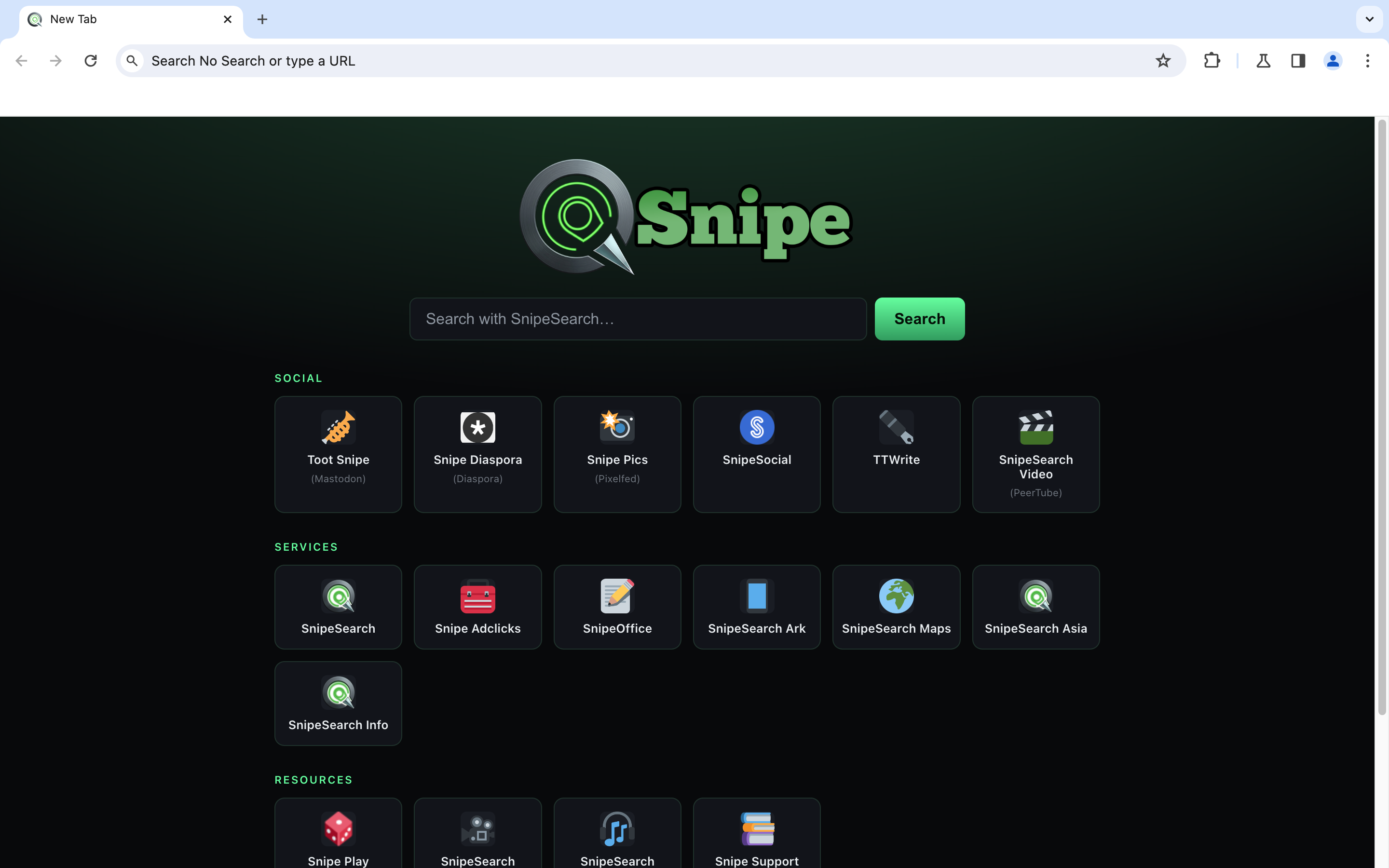
Chromium 124 on macOS 12 (Monterey) and higher, tested on Macs as far back as 2012. De-Googled, uBlock Origin and Ruffle in the core, SnipeSearch new tab, zero telemetry.
This is the macOS 12 and up build of Snipe: Chromium 124 / Blink, version 124.0.6367.207.1 (Official Build, Snipe Browser). It is a separate release line from the Windows and Linux 140.x desktop builds. Confirm your install with the browser detector.
Package file: Snipe-12-UP.zip. Download, unzip, drag Snipe.app into Applications, then open it. First launch may need a Gatekeeper allow.
Download the ZIP from this page. Double-click to unzip, then drag Snipe.app into your Applications folder (typical). Launch Snipe from Applications or Spotlight.
Optional: when prompted that Chromium isn’t your default browser, choose Set as default.
⬇ Download .zipmacOS may block first launch (“can’t be opened because it is from an unidentified developer” or Apple could not verify it). That is Gatekeeper, not Snipe telemetry.
1. In Finder, Control-click Snipe.app → Open → confirm Open (works through Sonoma; use Finder, not Launchpad).
2. If the dialog only offers Done / Move to Trash (common on Sequoia): try open once → System Settings → Privacy & Security → scroll to Security → Open Anyway → authenticate.
Monterey: System Preferences → Security & Privacy → General → Open Anyway. Full guide: Help · macOS Gatekeeper.
SnipeSearch as the new-tab portal, uBlock Origin in the core, Ruffle for Flash content, a local password manager, and a macOS ⌘Q quit warning in Appearance, all without Google services, AI, or background telemetry.
uBlock Origin compiled into the binary. Blocks tracking networks with a curated whitelist for privacy-respecting ads.
Built-in Flash emulation, games and legacy interactive content run inside the modern sandbox without additional plugins.
Private search routing from the new-tab portal out of the box (no Google as the default engine).
Offline password manager and autofill kept on-device. No forced cloud sync or AI components.
Built for Monterey and higher, tested on Macs as far back as 2012, including Core 2 Duo machines and later Intel Macs.
Download the ZIP, unzip, drag Snipe.app to Applications (no installer wizard required).
Closing the window kills all Snipe processes (no tray icon, no lingering RAM use). Appearance includes a ⌘Q quit warning.
No on-device models, no cloud assistants, no generative tools baked in.
Browser check, About Snipe, settings (including the ⌘Q warning), and the full SnipeSearch ecosystem on macOS 12.
macOS 12 (Monterey) and higher. This is the Mac Chromium 124 channel (not the Windows/Linux 140 line). Package hosted on snipebrowser.com (direct ZIP). Full product notes: Snipe macOS 12 and up reference. If you would like to try SnipeOffice, it is available as a separate download.
Desktop: Download Snipe-12-UP.zip, unzip it, then drag Snipe.app into Applications. On first open, use right-click → Open (or allow under Privacy & Security) if Gatekeeper blocks the app.
Direct link: served from this site (not Archive.org).
⬇ Download .zipSnipe.app to ApplicationsExpected for a ZIP-distributed browser outside the Mac App Store. Same issue on Monterey through Sequoia.
Through Sonoma: In Finder, Control-click (right-click) Snipe.app → Open → confirm Open.
Sequoia / when Control-click fails: Open the app once (click Done if that is all you get) → System Settings → Privacy & Security → under Security click Open Anyway → enter your password / Touch ID → confirm Open.
Monterey: System Preferences → Security & Privacy → General → Open Anyway after a blocked attempt.
Full walkthrough: Help · When macOS blocks Snipe.
No. macOS ships on a separate Chromium 124 channel: 124.0.6367.207.1. Windows and Linux desktop builds are on the 140.x line.
Those releases use the separate Mac Legacy channel (MacLegacy/… in the user agent). Same Chromium 124 family for now, but a different update path so macOS 12+ can move ahead later.
Open Settings → About Snipe, or go to chrome://settings/help. You should see Version 124.0.6367.207.1 (Official Build, Snipe Browser) (x86_64). You can also use the browser check page.
Export them as a CSV from Google Password Manager or Brave, then import that file into Snipe’s local Password Manager (open chrome://password-manager/settings and use Import passwords). Full walkthrough with screenshots: Import Google / Brave passwords into Snipe.